This post was originally published on this site.

Hello everybody,
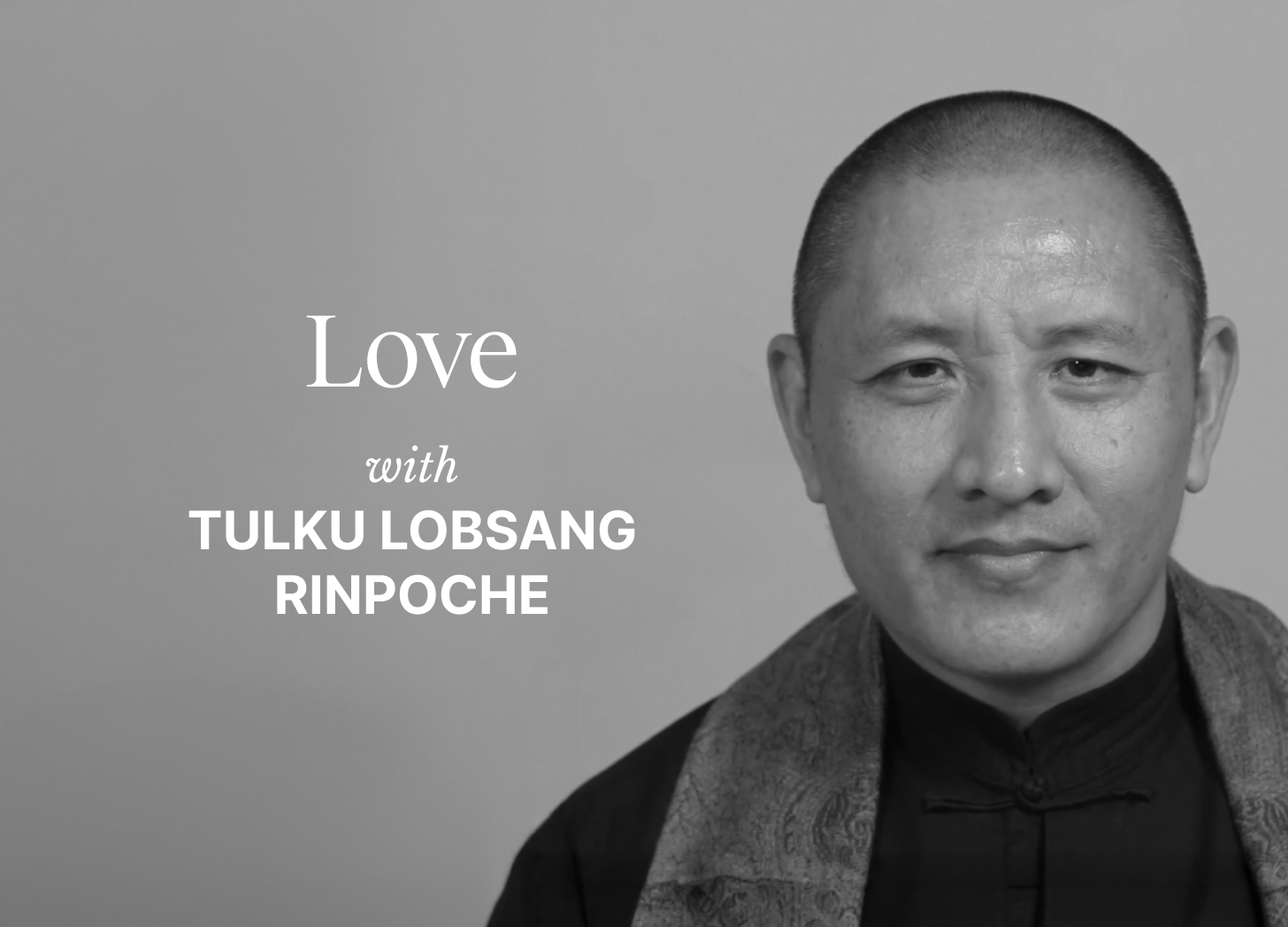
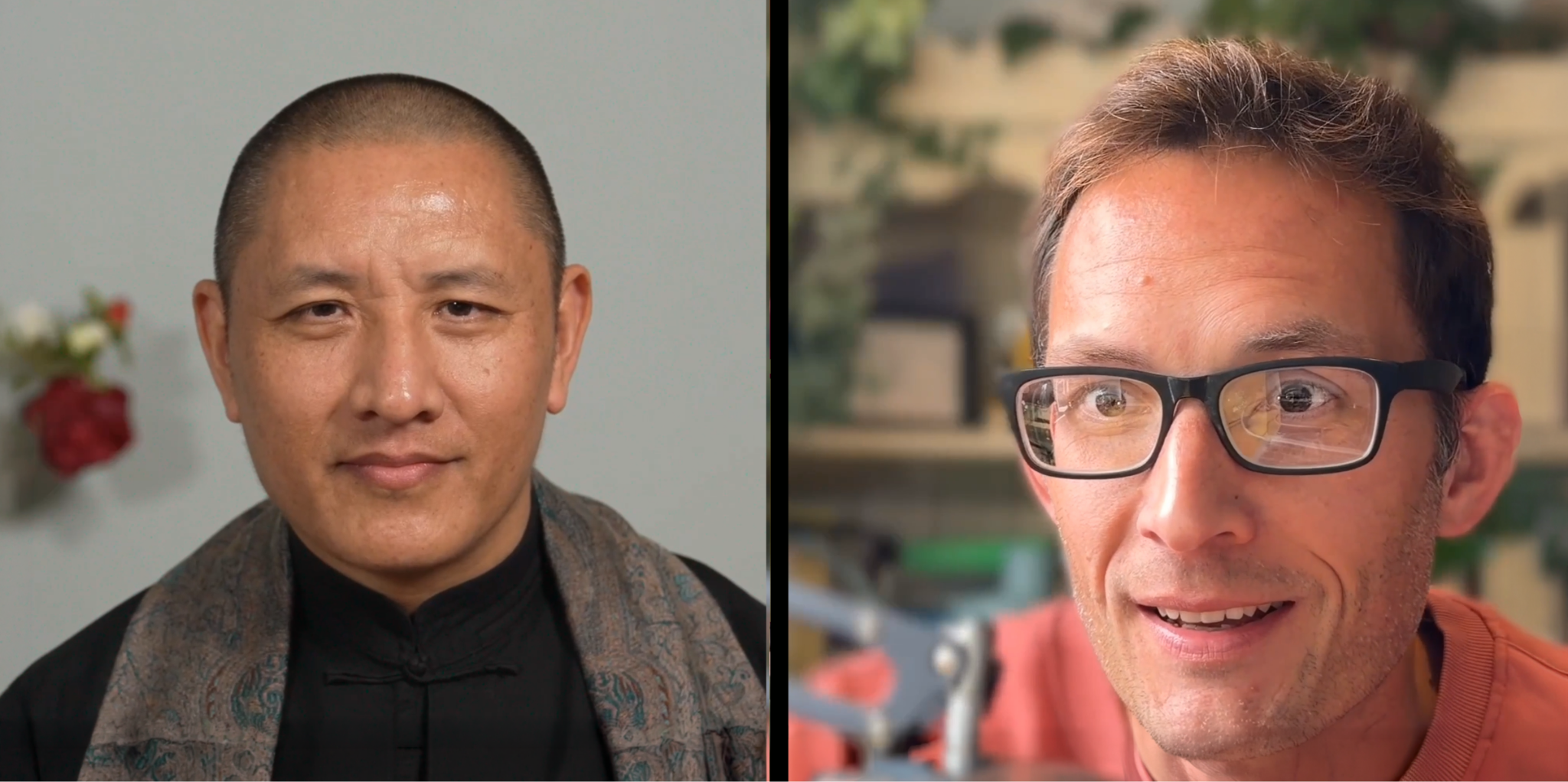
This week we’re looking at the Buddhist philosophy of laziness with Tulku Lobsang Rinpoche. Paid members can find the full version here.
On Monday, I spoke with a reincarnated Lama.
That’s a sentence to invite an eyebrow raise and a bit of old-fashioned self-analysis. For one, it’s made me appreciate how lucky I am to do what I do. To speak with a Tibetan Buddhist master on Monday and a cognitive scientist on Friday is a rare and wonderful thing. But it’s also made me aware of just how little I know about philosophical schools outside my niche.
I’ve spent decades studying mostly the Greek to Roman to European to American philosophical tradition. Everything else is kind of an embarrassing darkness. It’s like having a house and living only in one room. This room has all the lights on, pictures on the walls, and all the fluffy pillows you’d like. But all the other rooms are hidden behind locked doors.
Well, this week I unlocked a door. I interviewed Buddhist master Tulku Lobsang Rinpoche with the intention of exploring the other rooms in the house, and it was a joy. I don’t know if it’s Rinpoche’s ability to teach so well or something structural to Buddhism itself, but everything is presented in neat, numbered packages: “Three roads to enlightenment,” “Three kinds of laziness,” or “Four kinds of liars.”
Buddhism is a content creator’s dream. Hook the audience, pull them along, and give them an actionable mnemonic to wear on their belts. And here I have selected one of the best. Today, we look at “the three elements of love.”
Go well,
Jonny
The loving cure-all
There’s a particularly saccharine quote I’m rather fond of: “If you love someone, set them free. If they come back, they’re yours; if they don’t, they never were.”
It might look good plastered all over Facebook, but it’s also got philosophical pedigree. It’s there in Plato, Aristotle, and Seneca, all the way up to Simone Weil, Erich Fromm, and Iris Murdoch. Of course, these names are all firmly inside my wheelhouse. They live as books on the shelf in that well-lit room of my house. It turns out that Buddhism has a similar but subtly different angle to offer.
Rinpoche argues that there is a difference between attachment and love. Attachment is when we cling to another person. We get possessive of them. We get jealous. We don’t give them space. But for Rinpoche, love is something else entirely. And he told me that the love of another involves three things.
First, there is kindness. Rinpoche frames all of these elements of love as “antidotes” to something that wears us down. Love is a force that cures the “three poisons” of Buddhism that often cause us to suffer. And kindness is seen as the antidote to anger. Because we get angry when we feel people are out to get us.
Imagine you’re in the shop and someone barges into you. You turn around, angrily thinking someone has wronged you. You’re ready to be furious at an aggressive lout. But then you see an embarrassed 7-year-old pushing a shopping cart. Your anger dissipates.
Anger is often about perceived offense, and kindness is what sees people not as obstacles or as enemies, but as allies. Kindness softens the way we look at others’ intentions. It assumes it was a mistake rather than malice, and asks what someone might be struggling with before grumpily assuming they are out to get us.
Second, there is compassion. Compassion is the antidote to attachment, because attachment is what holds people too tightly. Attachment is what keeps the bird in the cage.
Compassion, though, gives somebody space. It allows them to make mistakes, to be imperfect, and to try something new. In a lot of relationships, we become attached to a certain version of a person. It might be the person we first met at the start of a relationship or an idealized, disconnected image we hold of them in our heads. But compassion gives someone the room to change into somebody different from what we might have expected of them. Love allows the other to move forward on their own terms and not according to some rat’s maze we’ve constructed for them.
Third, there is bodhicitta. Rinpoche describes bodhicitta as the antidote to ignorance, and it’s a great way to understand the idea. Because it is ignorant to try to understand the world from only your point of view. It is ignorant to assume the limits of your mind are the limits of the world. As Francis Bacon put it, when you spend your life living in a cave, it’s poor philosophy to assume that is all there is. The limits of your cave are not the limits of the universe. My reading philosophy in one room is not the same as learning all philosophy.
Bodhicitta accepts this and seeks to see things not only from another point of view but, in love, from another person’s point of view. It tries to see the world with their eyes, to understand their needs, and to experience things from their position. For example, I will often get irritated at my wife for leaving things too late. It takes 30 minutes to get to a 2 p.m. meeting, so why is she still getting changed at 1:40 p.m.?! Bodhicitta is what puts me in her shoes — or, more precisely, into her bare feet as she frantically looks about for her shoes that our eldest has hidden under the kitchen sink.
And so, the question of love actually comes down to three different questions:
Do I see them in the best possible light?
Do I give them enough space?
And do I see the world from their position?
Because love is not about desperately clinging to somebody or seeking your own happiness in somebody else. It’s when you find your own joy in the joy of another. It’s when you make a home into the room that they live in.
IN A QUOTE


Jonny is the creator of the Mini Philosophy social network. He’s an internationally bestselling author of three books and the resident philosopher at Big Think. He’s known all over the world for making philosophy accessible, relatable, and fun.
More Big Think content:
Big Think | Big Think Business | Starts With A Bang | Big Think Books