This post was originally published on this site.


Hello everybody,
This week we’re looking at animal role models.
On Oct 20th, I’m hosting our first Mini Philosophy Salon for members. In the salons, I’ll introduce a topic and invite people to share their thoughts. The first topic is “Being authentic.”
If you’d like to register, upgrade to become a member.
This might be my most controversial opening.
You might have noticed how I tend to stay clear of all the culture-war, shouty stuff in this newsletter. I talk about the philosophy of religion and political theory, of course, because they’re key parts of the discipline. But as a general rule, I try to avoid the especially inflammatory things. This isn’t because I don’t have opinions or thoughts about them, but it’s just that I think some conversations are better had in person.
Until today. Because today, I’m going to put my cards on the table and say something controversial: I dislike cats.
Not only do I think dogs are superior to cats in almost every category, but I think cats, in themselves, embody certain vices I dislike in human beings. That’s why, in my Big Think column this week, I take issue with philosopher John Gray’s argument that we should all be more like cats.
I think cats are cold, vain, and aloof. They will love-bomb their human when it’s clear they need food, or warmth, or have gone too far.
What with the Gray column and a recent visit to the zoo, I’m a little animal-minded right now. And this focus has got me thinking about just how often we turn to the natural world to understand our own nature. We easily fall into this habit of seeing animals as embodying certain virtues and vices. Like some Stone Age cave dweller, drawing bears on the wall, we extrapolate from animals.
And so, this week, I want to look at the moral archetypes of animals.
Go well,
Jonny
Be like the crane
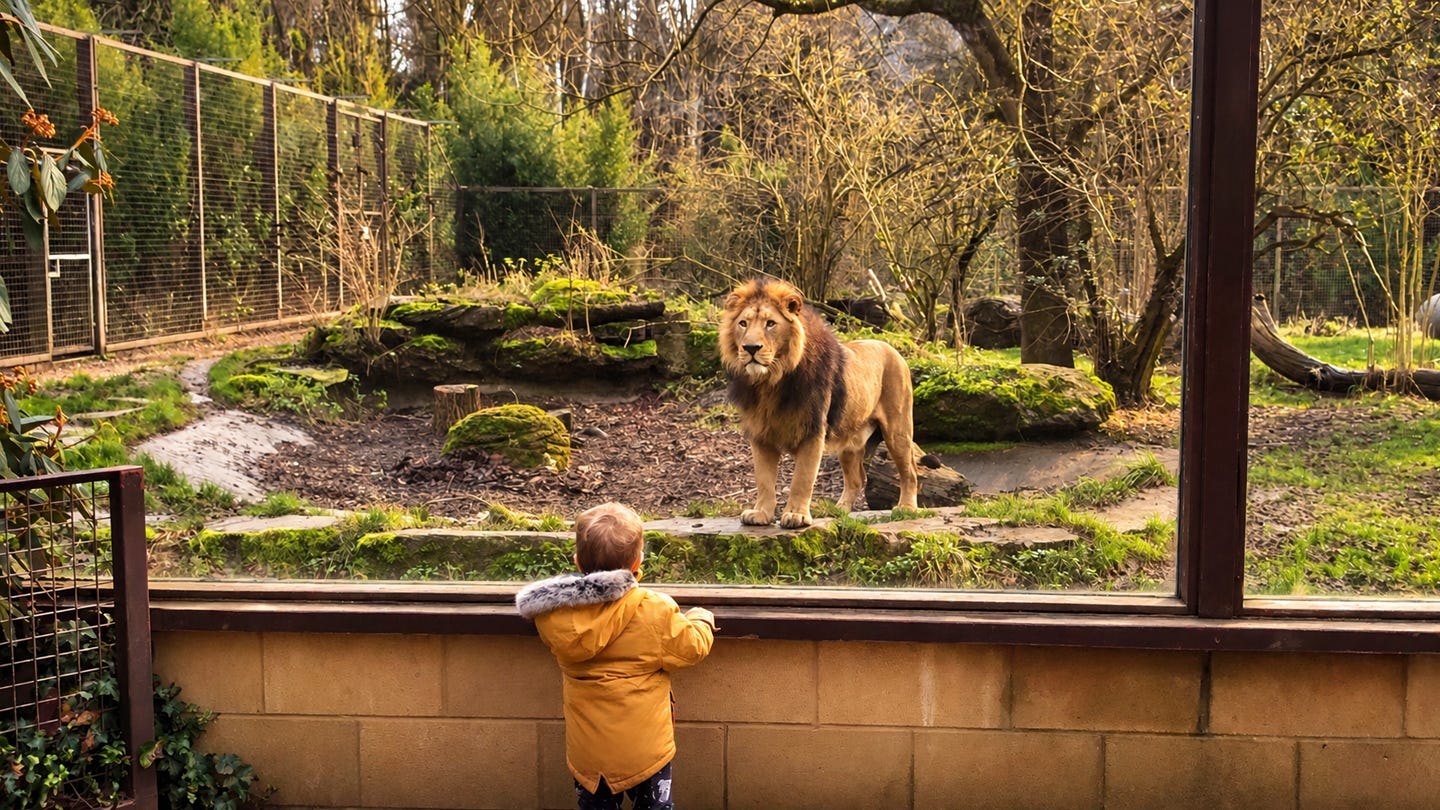
In the early weeks of September, I was at Cotswold Wildlife Park with my dad. The kids were off meddling somewhere, and we were sitting on the bench overlooking the prairie dogs.
“What animal are you?” I said to my dad.
“Huh?”
“What animal are you most like?”
“Well, a donkey, of course,” he said, and we chortled. It’s funnier when you’re in your late 70s.
“Yes, very good, Pops,” with a roll of the eyes. And then he sat thinking for a while.

The big conversations worth having
W. Kamau Bell invites those he admires—like Michael Lewis, Robert Reich, Anna Sale, and others—to connect, share how we can make the world a better place, and find reassurance in these hectic times.
“I think a crow,” he said. “I like puzzles and stuff, but I also like to be alone in my nest. Also, I like to think I’m some kind of evil omen to curse you.”
It’s a nice answer. I’m sure you’ve had a similar conversation because humans often look to the animal kingdom for examples. It’s why all those “What animal are you?” quizzes or “What’s your spirit animal?” questions are so popular. We want to embody what the animal represents.
This is an ancient tradition. Culturally, shamans, totems, and prehistoric religious rites almost always feature animals prominently. Egyptian falcon-heads, Indian monkey gods, and a Greek Minotaur roaring around a labyrinth. In a bygone world, we simply lived among animals much more.
Philosophers, too, have long leaned into animal metaphor — “Be more like the lion: brave, proud, and strong!” For a long time, before science took all the fun away with “empirical proof,” philosophers even built a kind of biological metaphysics around animals. In the 17th century, it was common to say that humans were a microcosm of passions, virtues, and vices, whereas animals contained only one or a few. Meanwhile, “theriophilia” is the belief that animals are morally superior to humans. To be a good human is to be more animal.
So, let’s look at what history’s theriophilists had to say about five animals.
The ant
In the book of Proverbs, we get this line: “Go to the ant, thou sluggard… Which having no guide, overseer, or ruler, Provideth her meat in the summer.” And Plutarch observed that ants nip seeds so they can’t sprout while stored inside the nest. The ant embodies diligence and prudence. They work hard for the greater good. They toil through the summer to give themselves fodder for the winter.
To be more ant-like, we should plan better. Put money away into your retirement account. Nurture your friendships. Invest in your skills and talents. Do Pilates. Tomorrow will come in a blink.
Fact check: Mostly true; ants do just do their thing without a “ruler.” The beauty of DNA. But when it comes to seed nipping, it’s only harvester species that do that.
The elephant
The elephant is probably philosophers’ most cherished animal. The ancient Greek and Roman world became borderline obsessed with them, first through dubious secondhand accounts from distant empire-building armies like Alexander’s, and then when the Romans faced Hannibal and his elephants firsthand. Pliny calls elephants wise because it was thought they could follow orders, practice things they got wrong, and bury their fallen tusks so as not to attract hunting humans.
So to be more elephant, we should reflect more. Take stock of when things went wrong, why they went wrong, and work out how to prevent it in the future. Practice. Get better.
Fact check: All pretty much true, but we’ve not replicated Pliny’s observation of hidden tusks.
The dog
A classic. Dogs and wolves are the archetypal pack animals. Both Pliny and Cassius Dio retell the story of Titius Sabinus’s dog, who stayed by his executed master and then swam into the Tiber trying to keep Titius’s body afloat. More recently, you’ve probably heard the story of Hachikō, the Japanese Akita dog who waited for his owner at Shibuya Station for nearly 10 years after the owner’s death. Heartbreaking, yes, but also deeply admirable.
To be more dog means putting aside all the many temptations of life to stay true to your people. Stand up for a friend in a meeting. Go see your sibling when they need you. Never sell your mother.
Fact check: Hachikō existed, and this makes Titius’s dog more likely. Dogs are famously loyal and protective — there are countless data points to prove it.
The crane
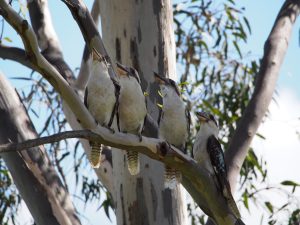
Pliny again, but it was repeated often enough to become an ancient legend. The story goes that night sentry cranes will clutch a stone, so a drowsy guard drops it and is found out. The crane has developed a tool to keep itself alert, like a dozing grandfather holding some keys.
Be more crane by “self-binding” yourself. When you want to do a task, make failure unthinkable. Make yourself accountable, put something valuable up for forfeit, deny yourself something you love if you get it wrong. Find a “rock” to hold that will let others know you’ve fallen asleep.
Fact check: Most dubious of them all. Even Aristotle, before Pliny, called out this folk legend as nonsense. Cranes — like a lot of birds — will eat rocks to mash up their food as part of digestion. But what is true is that cranes will often simply share and rotate their watch duty as any human guard might do.
The cat
The anti-archetype. Thomson (yes, me) observed that cats are cold, vain, and aloof. He thinks they use affection as a weapon to get what they want. So, “to be more cat” means to schmooze your boss the week before your review, eat the last chocolate in the box, and trash the house and expect others to tidy it up for you.
Fact check: Thomson’s theories are almost entirely based on a childhood experience with an especially grouchy, scratchy, aggressive cat called Mabel, who he likely rubbed the wrong way. His anecdotal prejudice is not corroborated by millions of powerful, wealthy cat-lovers who have the means to sue Mini Philosophy for libel.
So, what is your spirit animal? What virtue or passion do you want to embody more from the natural world?

Jonny is the creator of the Mini Philosophy social network. He’s an internationally bestselling author of three books and the resident philosopher at Big Think. He’s known all over the world for making philosophy accessible, relatable, and fun.
More Big Think content:
Big Think | Big Think Business | Starts With A Bang | Big Think Books