This post was originally published on this site.
I’ll Learn About The Unconscious Mind in Philosophy, Right?
A few different things drew me to want to study the philosophy of mind. One of them was learning about language (see here, for why) and another was a fascination with the mind in general. But to me, a prime reason the mind was so interesting was because of the effects of the unconscious mind.
I arrived to the philosophy of mind, naive, and at the graduate level, assuming I’d be delving into such topics. But what I found — and of course, I can only speak to the tradition in which I was trained, analytic philosophy — was virtually no discussion of it. Everything I was introduced to in the philosophy of mind was the philosophy of the conscious mind.
AI’s Without Minds is a reader-supported publication. To receive new posts and support my work, consider becoming a free or paid subscriber.
Intuitively, every human being knows that overwhelmingly, their mind is operating below conscious awareness. Presumably, this is for a number of reasons. When I am tired, for example, it’s much harder for me to articulate my thoughts. I figure — and I have not read the research on this — that makes sense. It takes the brain a lot of energy to articulate my thoughts, why do this when energy is scarce and needed for more important functions?
When we introspect on our thoughts for any period of time, we will notice too, the shear volume of thoughts that can come to mind. It happens so quickly. When you’re distracted and/or don’t want to listen to all of those thoughts, why would your brain tell you what they are? I could go on.
But it nevertheless felt strange to me that the analytic tradition so systematically discarded the unconscious mind. It made no sense, given how much of the mind it made up. But, as with most things, there are reasons—-historical ones.
The Cartesian Myth
We learn virtually nothing about the unconscious mind in the philosophy of mind due to what I’ll call the Cartesian myth. This is the pervasive — and frankly incredulous hypothesis —that our mind is infallibly and transparently known to us. Now, this doesn’t mean that our judgements about the world can’t be wrong.
This view will not deny, for example, that we can make poor perceptual judgements (e.g., that the glass is taller than it is). And of course, there are philosophers who deny this myth.1
Rather, the myth is that anything that is immediately present to introspection or anything that reaches conscious awareness concerning our own mental states, cannot be incorrect.
For example, if I tell you that I am in pain (and genuinely believe I am in pain), then I am in pain. If I tell you that I like the taste of chocolate cake (and genuinely believe that I like it) then I like the taste of chocolate cake, and so on.
All of this can sound relatively innocuous. After all, if someone tells you they are in pain, you should I think, believe them. And pain – because it is an easy case perhaps – is the paradigmatic case philosophers who believe in the infallibility of introspection like to bring up. But as with many things in life, things are not so simple. Even the pain case can be made more complex.
The easy case is someone telling you they are in pain. We can all recognise that if someone says they are in pain, that they are in pain. But what about cases where people deny that they are in pain? Is this introspective judgement as reliable as the positive assent case? I don’t think that it is. It seems to me that there are many instances in which humans are suffering, and fail to recognise it. In other words, there are many instances in which we deny our own pain.
But what does this say about our introspective abilities? Well, in analytic philosophy of mind, my bringing up the case of pain denial is inconvenient to say the least. For whatever reason, such cases are rarely if ever discussed.
Surely both constitute an experience and are as such, worthy of investigation.
The Case of Pain
Well, let’s look at the case of pain since philosophers (for whatever reason) talk about it all the time. Sure, being in physical pain might be difficult for someone to deny, but being in emotional or psychic pain seems to me something that we humans routinely deny, without this discounting the fact of being in pain.
I am not a psychologist, so I won’t speak primarily from the science, (though there is science on how unreliable introspection can be)2 but I reckon most of us can think of a time in our lives where we told ourselves certain stories, i.e., genuinely believed something, that, upon reflection or growth, we now understand was manifestly false. The case of pain included.
When thinking about this, a quote from Dr Gabor Maté always comes to mind, because the first time I heard it, I thought, ‘wow, that makes so much sense’.
The ‘‘ordinary egoic human mind’’ he said ‘‘is basically a defensive structure.’’3
Viewed this way, it seems highly likely that at some point or another, we have been in pain, suffering, or something similar, but denied it to ourselves. Why? because our mind was defending against the reality of being in pain.
Is that not a case of our introspective capacities lying to us? Now, a Cartesian could try to worm their way out of this. They could say, yes the belief that I am not in pain is false, but the existence of the conscious state (i.e., that I do genuinely have the belief that I’m not in pain) that much is transparent.
Sure, we can make that distinction. But what exactly is the significance of it? If what introspection guarantees is only that I have a certain belief, not that the belief correctly tracks my actual mental life, the transparency is pretty thin and uninteresting. It seems trivially true, that of those mental states that are transparent to me, the transparency of my mental states hold.
And if that’s all the myth is claiming, it’s not saying much at all. The interesting claim — the one that has driven so much of the work in philosophy of mind the last several decades (or centuries)— is that we have a special, privileged access to our own mental states. That we are not, in some deep sense, wrong about ourselves. That is the claim that I reject at least partially.
I do, for example, believe that we have the capacity to know ourselves better than others can know us, but that is a different claim (and a whole other debate).
The Infallible vs Defensive Mind
There are historical reasons we came to view the conscious mind as infallible and it is worth pausing to consider what we might see differently if we swapped the Cartesian lens for a different one.
First, the Cartesian lens forces on us what is I think — and some philosophers have argued this very effectively4 — a false dichotomy between the conscious and unconscious mind.
This means that we can neatly categorise a mental state as ‘conscious’ or ‘unconscious’. But can we?
In philosophy, we assume that a neat distinction exists, and if we are wrong about this — we are headed down some confused research paths. Consider for example, theories such as Global Workspace Theory, Integrated Information Theory, and the like.
All of these theories rely on the (ultimately) Cartesian idea that the conscious-unconscious divide is some kind of neat binary that exists: you’re either conscious of something or you’re not. but if the conscious/unconscious distinction is fuzzy, theories treating consciousness as a discrete on/off state is problematic.
Consider alternatively, a conception of our minds as something like a defensive structure.5 In this case, no conscious-unconscious divide arises as a distinctive thing to be investigated or studied. Rather, our explanatory goals are completely different. The question is no longer what makes something conscious as opposed to unconscious (which global workspace etc by design are seeking to answer).
Instead, the questions become something like: why does the mind construct the particular picture of itself that it does? What is it protecting, why, and at what cost? These are not questions the Cartesian framework has the resources to even ask, let alone answer. This is to show how deeply our framework determines our questions, and therefore, our answers.
I don’t think that the conscious-unconscious divide exists in the neat way we assume, and so, I lean away from the Cartesian picture that I was trained to believe in. But for those who do lean more that way, it seems to me that these questions should at least be a conversation that we have.
Because the bottom line is always the same: the questions that we ask presuppose a certain set of assumptions. And so, we would want to be sure that we are willing to accept those assumptions. Otherwise, we are digging the wrong hole.
The assumption I’m pushing back on here — that the Cartesian framework is the right one for thinking about minds — is the same assumption driving the AI consciousness debate. That argument is developed properly in the paid tier, which is open in just six days. Start with the course: What Everyone Gets Wrong About AI and Mind. It’s free with a paid subscription.
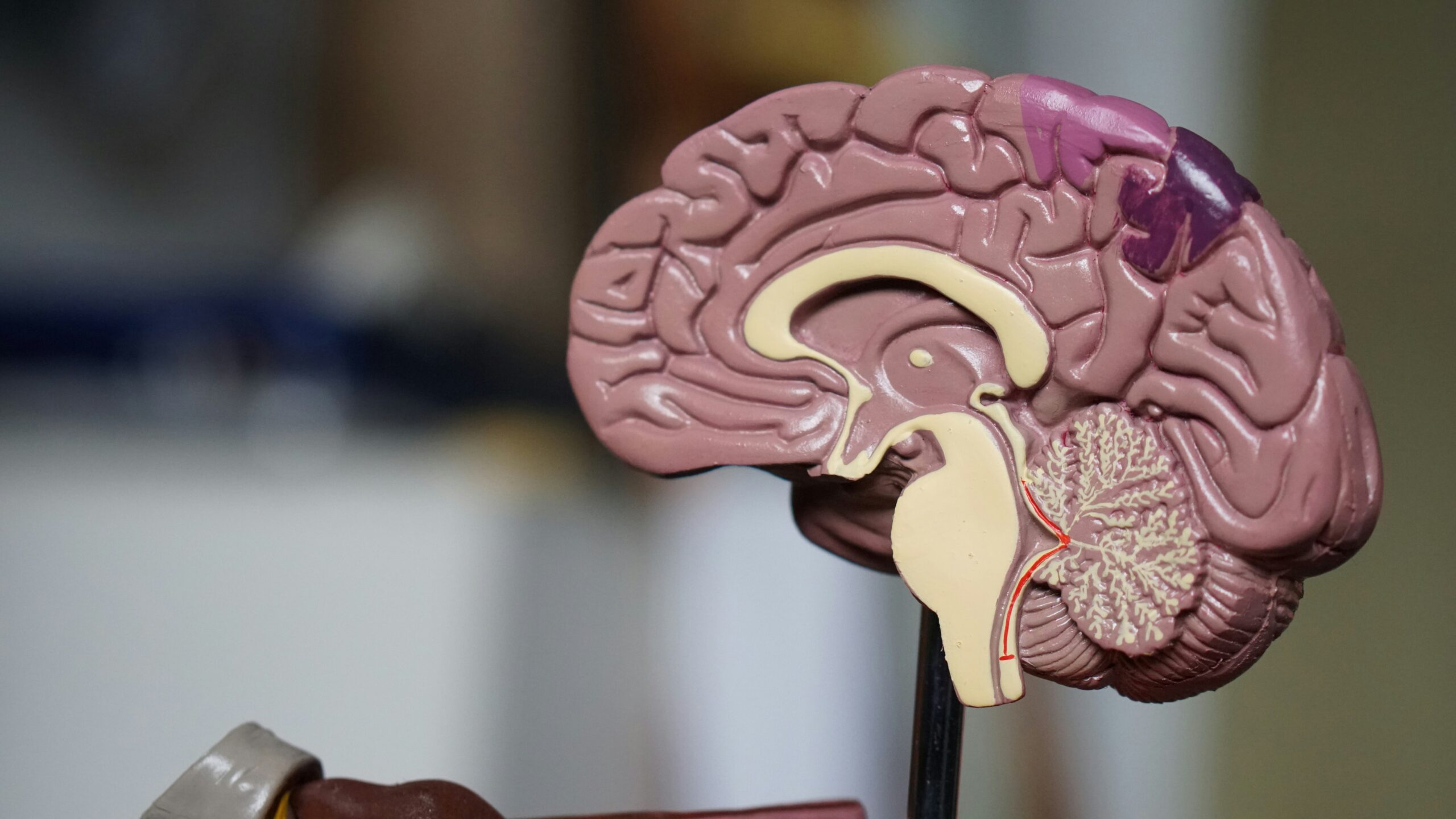
Photo by Robina Weermeijer on Unsplash
See for example, Carruthers, P. (2011). The opacity of mind: An integrative theory of self-knowledge. Oxford University Press; Damasio, A. (1994). Descartes’ error: Emotion, reason, and the human brain. Putnam; Frith, C. (2007). Making up the mind: How the brain creates our mental world. Blackwell; Schwitzgebel, E. (2011). Perplexities of consciousness. MIT Press; Wilson, T. D. (2002). Strangers to ourselves: Discovering the adaptive unconscious. Belknap Press.
See e.g., Nisbett, R. E., & Wilson, T. D. (1977). Telling more than we can know: Verbal reports on mental processes. Psychological Review, 84(3), 231–259; Wilson, T. D., & Stone, J. I. (1985). Limitations of self-knowledge: More on telling more than we can know. Review of Personality and Social Psychology, 6, 167–183.
Maté, G. [@gabormatemd]. (2022, November 4). [Reel about introspection/self-knowledge]. Instagram. https://www.instagram.com/gabormatemd/reel/Ckl_9gNAjaI/
Wilkes, K.V. (1984). “Is Consciousness Important?” British Journal for the Philosophy of Science, 35(3), 223–243.
See for example Thinking about citing “The Myth of Normal” as a source Maté, G. (2022). The Myth of Normal: Trauma, Illness, and Healing in a Toxic Culture. Avery/Penguin Random House. While Maté doesn’t talk about the mind explicitly in these terms in the book, the research he writes about here is the basis for such claims.